
Parodontitis | Gum and Bone Inflammation
- Treatments /
- Parodontitis | Gum and Bone Inflammation

Would you like to become our patient?
Schedule your initial consultation today and begin your journey to a painless, healthier smile. Contact us now!
What is periodontitis?
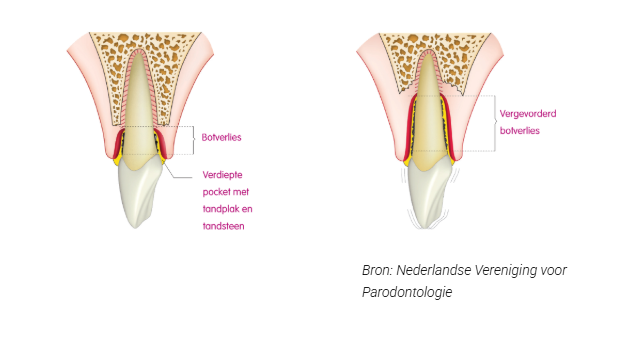
Als tandvleesontsteking (gingivitis) niet wordt behandeld, kan de ontsteking zich uitbreiden naar het kaakbot. Het tandvlees laat los van de tanden en kiezen, waardoor er ruimtes ontstaan (pockets) die dieper worden dan 3 mm. In deze pockets hoopt tandplak zich opnieuw op, wat de ontsteking verergert. Het kaakbot breekt af en de tandplak verandert deels in tandsteen. Deze voortschrijdende ontsteking heet parodontitis. Parodontitis behandeling Den Haag in ernstige gevallen kunnen tanden en kiezen los gaan staan en uiteindelijk uitvallen.
Symptoms of periodontitis
Periodontitis kan zich langzaam ontwikkelen en lange tijd onopgemerkt blijven. Mogelijke klachten zijn:
- Red, swollen, or soft gums
- Bleeding during brushing or eating
- Receding gums (teeth appear longer)
- Bad breath or unpleasant taste
- Sensitivity to temperature or pressure
- Shifting teeth or new gaps
- Loose teeth
Note: These symptoms may not always be present. Regular check-ups are essential.
How is periodontitis diagnosed?
A dental hygienist uses a probe to measure the depth of the pockets between your teeth and gums. They also check for bleeding, tooth mobility, and gum condition. X-rays reveal whether and how much bone loss has occurred around the roots.
Causes and risk factors
Periodontitis is influenced by multiple factors:
- Bacteria in dental plaque: The composition and aggressiveness of bacteria vary from person to person. Your immune system also plays a role.
- Bacteriën in tandplak: De samenstelling en agressiviteit van bacteriën verschilt per persoon. Ook je afweer speelt een rol.
- Smoking: Harmful substances like nicotine reduce blood flow and gum defenses. Smokers are more likely to experience bone loss and poorer healing.
- Systemic diseases and stress: Conditions like diabetes (especially poorly controlled), cardiovascular disease, and psychological stress can worsen periodontitis. While the exact link is still being studied, overall health impacts oral health.
When to seek advice
Contact your dentist or dental hygienist if you notice:
- Bleeding gums during brushing, flossing, or eating
- Sensitive or painful gums
- Receding gums
- Teeth shifting position
- Loose teeth
- Bad breath or unpleasant taste
Advanced periodontitis
In een later stadium kunnen tanden en kiezen los gaan staan of ontstaan er zichtbare ruimtes. Teruggetrokken tandvlees kan leiden tot blootliggende wortels, wat gevoeligheid veroorzaakt bij poetsen en bij het eten of drinken van warme, koude, zoete of zure producten. Ook het uiterlijk van het gebit verandert. Zonder parodontitis behandeling Den Haag kan het kaakbot zodanig afbreken dat tanden en kiezen hun houvast verliezen en uitvallen.
- FAQ
Frequently Asked Questions
Orthodontics is a dental specialty that focuses on diagnosing, preventing, and treating dental and facial abnormalities, such as crooked teeth and jaws.
Dental sealants are thin, protective layers applied to the chewing surfaces of teeth to prevent cavities.
Yes, teeth whitening treatments performed by a dentist or with dentist-approved products are safe and effective.
Cosmetic dentistry focuses on improving the appearance of teeth, gums, and smile through treatments such as whitening, veneers, and bonding.
Home whitening options include whitening strips, gels, toothpaste, and custom-made trays prescribed by your dentist.
📞 Contact Dental
Care Statenkwartier
Do you have a question, would you like to change an appointment, or would you like more information about our treatments?
Complete the form and click “Send.”
We will respond as quickly as possible—usually within one business day. You can also contact us by phone or email e-mail reaches.